


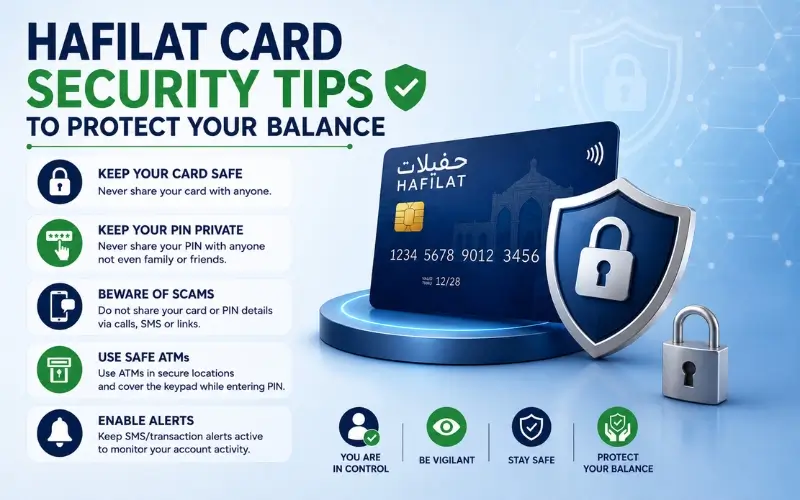
Your Hafilat card isn’t just plastic in Abu Dhabi; it’s your everyday companion to life’s destinations. You load money on it, hit it dozens of times a week and likely never think twice about its security. However, like a debit card or a digital wallet, your Hafilat card has a real monetary value and that makes it worth protecting.
You might be a regular commuter, student, or if you don’t use public buses that often, you know how to take care of your card to avoid losing it, having it used without your authorization, or replacing it—at the wrong time. The first smart habit to start is to hafilat balance check online on the web on a regular basis, and if you notice your balance has dropped unexpectedly, it’s probably an indicator of the fact that something is amiss.
It provides you the best security measures you can take to ensure that your Hafilat card is protected and you have a positive balance.
Why Hafilat Card Security Deserves Your Attention
Most people have a tendency to consider transit cards as low-risk cards. You don’t save thousands of dirhams in a bus card after all. However, take note of this if you fill in AED 100 weekly, which amounts to more than AED 5,000 per year in transactions going through your card. If you accidentally lose your card or someone impersonates you to access your online account, all your money can be gone in a flash.
In addition to the financial side, your registered Hafilat card also contains your personal data, such as your name, Emirates ID information, contact number and travel history. Once you protect that card, you’re also protecting that data.
Fortunately, there are some easy-to-follow tips that help make your Hafilat card much safer without adding any extra expense or effort.
Tip 1: Register Your Card Immediately After Purchase
This is the one most critical measure you can take for security, and many commuters don’t even do this.
If the card is not registered, it’s basically anonymous. If lost, it will be lost. It’s any one’s business and is available to use until the credit expires. You can’t block it, you can’t get the money back and you can’t prove that it was yours!
With a registered card, you will receive:
- Facility to remotely block the card when it’s lost or stolen.
- This can be done at a lower annual percentage rate.
- A complete transaction history to detect illegal use.
- Access to account online to check the card anytime
It takes less than 10 minutes to register and is free, and can be completed 100% online via hafilat.gov.ae or via the ITC Smart Services app. There is really no justification to not register your card.
Tip 2: Monitor Your Balance and Transaction History Regularly
A simple way to spot a security problem at an early stage is to regularly review your card activity. Any imbalance, unexpected place of transaction, or several charges in a short period of time may all be red flags.
Check your card’s transaction history regularly (at least once a week). This can be accomplished by:
- Tap your card profile to access detailed history of recent trips & top-ups in the ITC Smart Services app.
- Log in to the Hafilat internet portal and go to your card’s Activities tab.Log in at the Hafilat online portal and select Activities tab on your card.
- Kiosk self-service desks at bus stations Show the most recent transactions if you tap your card
The better you know your normal spending, the quicker you will know if something is amiss. Just as you would a bank statement review routine, make it quick, short and quite revealing.
Tip 3: Set Up Balance Notifications on the ITC App
The ITC Smart Services app lets you set up alerts for low credit balance, which alert you if you reach a level of low credit you set, on your card. This feature is mostly a reminder to fill up before you’re out of fuel, but it also acts as a security measure.
When your balance drops suddenly by a great amount overnight, particularly if you have not travelled, this is an early warning sign. If you receive a notification for an unexpected AED (Australian Dollar) deduction, that means it’s time to check your transaction history right away and reach out to ITC support if you see something suspicious.
To set this up:
- Tap the ITC Smart Services app.
- Click on card settings.
- Allow balance alerts and set a preferred balance limit
- Save your settings
It only takes a couple of minutes and you may save yourself from a problem days later.
Tip 4: Keep Your Card Physically Secure
While all the attention is on digital threats, the most common method by which people lose their Hafilat card balance is by losing or being stolen. There are a number of simple habits which will make a huge difference:
- Do not place your card in a pocket or bag where it may drop out without anyone realizing it, put it in a special compartment in your wallet/cardholder.
- One way to reduce the risk of someone seeing your card number is to keep your card face down so that no one can see it.
- Take caution when using your card while reading at the bus readers, particularly in busy stations.
- Never leave your card on a table in a café, an unlocked locker or unlocked car
- If you are worried about contactless skimming – although this is a low risk issue with standard Hafilat cards – it is a good practice with all your contactless cards, especially with cards that support the use of a card sleeve or RFID-blocking wallet.
When you realise you’ve lost your card, move quickly. Do not delay to see whether or not it’s a report and block it right away.
Tip 5: Protect Your Online Account Credentials
Your Hafilat card is always as secure as your internet account it is linked to. Once someone accesses your ITC portal login, they have access to your personal information, can monitor your travel habits, and may be able to set up a balance transfer or change your card.
To ensure the security of your account, use the following practices:
- Create a strong and unique password that is at least 12 characters long, and includes lowercase, uppercase, numbers and symbols. Avoid using a password from a different account.
- If the ITC portal has two factor authentication (2FA), enable it as this provides another layer of security above and beyond your password.
- Do not sign on to public computers in internet cafes, hotel business centers or shared devices, it is a dangerous place to connect to any account that has financial information
- Remember to log off after use, particularly on shared or mobile devices.
- Exercise caution on public wireless networks and don’t use your Hafilat account on unsecured wireless networks. Use mobile data, or a VPN.
- Change your password regularly as a precaution.
Change your password as soon as you think your account may have been accessed without your permission and notify ITC support.
Tip 6: Be Alert to Phishing Scams and Fake Websites
The greater the reach of digital services, the more prevalent the scams that seek to masquerade as official sites to gain access to your login details or personal information is. This does not apply to the Hafilat and ITC brand.
Some common tactics to keep an eye out for:
- Websites that appear to be the same as the official Hafilat or ITC portal, but have a different URL.
- Emails or text messages stating that your card has been suspended and that you need to click on a link to restore your account are considered phishing attacks.Phishing emails or SMS that say your card has been suspended and you have to click a link to restore your account are phishing attempts.
- Social media frauds offering to give you discounted credit if you provide your card number and personal information.
- Anyone calls your to get your card number or account password for ITC.
The ITC will not request your Emirates ID number, password or full card number over the phone or email. If you get an e-mail that seems suspicious, please don’t click on any links, log in directly from hafilat.gov.ae or contact the official ITC hotline to verify.
Tip 7: Report a Lost or Stolen Card Immediately
Time is crucial when the card is lost. Reporting it quickly will keep those who find or steal it from using your balance.
If you have lost or stolen your card, here’s what to do immediately:
Step 1: Block the card online Log in to your account on the ITC portal or app, card details and select “Block Card” or “Report Lost/Stolen. This immediately inactivates the card.
Step 2: Reach out to ITC directly Call the ITC helpline and inform them of the lost card and request for a new one. Make sure to have your Emirates ID and registered business email ready.
Step 3: Opt for a balance transfer After blocking your lost card and getting a replacement, your remaining balance can be transferred over to the new card. The replacement request is done by ITC staff and this is a process.
Step 4: Review recent transactions to see that there may have been any unauthorized trips made or top-up reversal post-loss of the card. Should any suspicious activity be identified, make a clear statement about it to ITC in order to investigate.
Tip 8: Don’t Share Your Card With Others
Your registered Hafilat card is associated with your identity. Even sharing with a friend, family member or colleague is complicated:
- They will be traveling on your profile
- If you use it on any site that uses it for any purpose, anything you do becomes associated with your account.
- If there are any disputes, it makes separating the legitimate transactions from the unauthorized transactions more difficult.
If a family member requires their own card, then they should apply for one of their own. It is easy to do, and there are discounted options for qualified students and seniors.
Tip 9: Keep Your Personal Information Updated
If your mobile number or email address is outdated in your Hafilat account, you would not be able to receive security alerts or balance alerts or OTP codes when you need them the most.
Check your account on a regular basis (every couple of months) and verify that:
- Your mobile number is up to date and active.
- You use one of your email addresses that you check on a regular basis.
- Your Emirates ID Information is correct and current.
If you have recently changed your phone number or email provider, make sure to update your Hafilat account information right away.
Tip 10: Use Official Channels for Top-Ups Only
Refill your Hafilat card only from authorised sources. These include:
- The official website portal
- The ITC Smart Services mobile app
- The ITC service centres and authorised kiosks
- Retail partners who are officially registered by ITC, including some convenience stores and transit hubs.
Don’t load credit on unofficial WhatsApp services, social media pages or unofficial applications not available on the ITC website. Unauthorized top up channels are not only unreliable, they are direct channels to financial fraud.
What to Do If You Suspect Unauthorized Activity
If you see some transactions that you don’t recognize or if your balance has suddenly dropped to a number you can’t explain, do the following:
- Block your card via the app/portal
- Immediately change your account password.
- Snap photos of the suspicious transactions activities log.
- Please feel free to contact ITC or email with your reference details.
- If the unauthorised use includes substantial amounts of money, then ITC has a procedure in place for investigations of disputes.
The quicker you act, the better you can recover your balance and the more you can protect your account from further exposure.
Conclusion
Your hafilat card is a small card, but it has a lot of monetary and personal value and can’t be ignored. Security doesn’t have to be cumbersome or tedious. Just a few regular practices: registering your card, checking your balance often, keeping your logins safe and knowing how to block your lost card quickly. Abu Dhabi public transport is one of the most efficient in the region, and the Hafilat card is at the centre of it. It’s easy to use, and you can use it with confidence, if you follow the simple steps in this guide. The idea isn’t to make you feel anxious when driving to work every day, it’s to ensure that your Magic Card operates flawlessly at the bus stop on the morning you go to work.
Read Also: ATM Balance Check
