


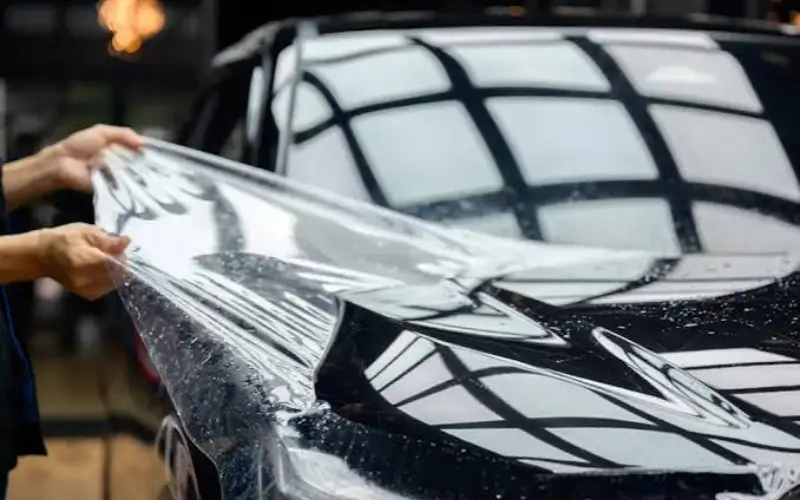
What Is PPF in Dubai
Paint protection film (PPF) is a clear, flexible layer of thermoplastic polyurethane applied to a car’s painted surfaces to protect the paint from stone chips, scratches, UV rays and environmental damage. It is virtually invisible, has self-healing properties, and typically lasts 5 to 10 years. This guide covers how PPF works, what it can and can’t do, how much it costs, and whether it’s worth it for your vehicle.
What Is PPF? The Short Answer
PPF, or paint protection film, is a transparent protective layer, usually 150–200 microns thick, that bonds to your car’s paint. It absorbs the impact of road debris, resists scratches, blocks UV exposure and repels dirt and contaminants. The original paint underneath stays in factory condition, which helps preserve the car’s appearance and resale value.
PPF was first developed to protect military helicopter rotor blades from flying sand and debris. Today the same idea protects everything from daily drivers to luxury and supercars.
How Does Paint Protection Film Work?
Modern PPF is built from several layers, each with its own job:
- Top coat: a clear, elastomeric layer with self-healing technology and hydrophobic properties. It keeps the gloss, repels water and dirt, and helps surface scratches disappear.
- Thermoplastic polyurethane (TPU) core: the thick, flexible body of the film. It stretches over curves and absorbs physical impacts from stones and gravel.
- Adhesive layer: a pressure-sensitive adhesive that holds the film on the paint but can be removed later without damaging the factory finish.
In simple terms, PPF works as a sacrificial barrier. The film takes the damage, so your paint doesn’t.
What Does PPF Protect Against?
PPF protects the paint against:
- Stone chips and gravel thrown up by other vehicles at highway speed
- Minor scratches and swirl marks from washing, keys, bags and brushes
- UV rays that fade and oxidise paint over time
- Chemical stains from bird droppings, bug splatter, tree sap and road tar
- Sand and road debris, especially in desert climates like the UAE
- Water spots and mineral deposits, thanks to the hydrophobic top coat
- Light parking scuffs on bumpers, door edges and side mirrors
What PPF does not protect against
PPF is not armour. It won’t stop dents, deep gouges, collision damage or vandalism with sharp tools. It also can’t fix damage that already exists. Chips and scratches should be corrected before the film is applied, because the film will seal them in.
Self-Healing PPF: How Does It Remove Minor Scratches?
Most high-quality PPF products https://carengineering.ae/paint-protection-film/ now come with self-healing properties. The top coat is made of a polymer that “remembers” its original shape. When light scratches or swirl marks appear, heat makes the surface flow back to smooth. That heat can come from:
- The sun on a warm day
- Warm water during washing
- A heat gun used by a detailer
Self-healing works on fine surface marks only. Deep cuts that go through the film won’t repair themselves, but the paint underneath will still be protected.
Gloss, Matte and Satin PPF Finishes
PPF isn’t only clear and glossy. You can choose a finish that preserves your car’s original look or changes it:
- Gloss PPF keeps factory paint looking deep and wet, and often adds extra shine.
- Matte or satin PPF turns a glossy car into a satin finish, or protects a factory matte paint that would otherwise be hard to maintain.
- Coloured PPF combines the change of colour you get from a vinyl wrap with the protection of polyurethane film.
Full vs Partial PPF Coverage: Which Areas Should You Protect?
You don’t have to wrap the whole vehicle. The most common coverage options are:
- Partial front: front bumper, part of the hood, side mirrors and headlights. Basic protection for the areas hit most often, at the lowest cost.
- Full front: the entire front bumper, full hood, front fenders, side mirrors and headlights. The most popular choice for new cars and highway driving, with no visible film line across the hood.
- Track pack: full front plus A-pillars, roof edge, rocker panels and the area behind the wheels. Designed for sports cars and frequent long-distance driving.
- Full body: every painted surface of the car. Best for luxury vehicles, matte paint and owners who want maximum protection and resale value.
High-impact areas such as the front bumper, hood leading edge, side mirrors and the area behind the wheels take most of the stone chips. That’s why even owners on a budget usually protect these first.
PPF vs Ceramic Coating vs Vinyl Wrap
These three products are often confused, but they do different jobs:
- PPF (paint protection film) is a 150–200 micron thermoplastic polyurethane film designed for physical protection. It protects against stone chips and scratches, has self-healing properties, offers high UV resistance and typically lasts 5–10 years.
- Ceramic coating is a liquid silica (SiO₂) layer only 1–3 microns thick. It adds gloss, hydrophobic properties and makes cleaning easier, but it does not protect against stone chips and does not self-heal. It usually lasts 2–5 years.
- Vinyl wrap is an 80–150 micron PVC film used mainly to change the colour or style of a car. It offers only light protection against minor scratches, does not self-heal and typically lasts 3–5 years.
Can you combine them? Yes. Many owners apply PPF to the front of the car and a ceramic coating over the film and the rest of the body. The film handles physical impacts, while the coating adds gloss, extra chemical resistance and makes washing easier.
How Long Does PPF Last?
Quality PPF typically lasts 5 to 10 years, depending on the film brand, installation quality, climate and maintenance. Premium films from leading brands often come with a 10-year manufacturer’s warranty covering yellowing, cracking, bubbling and peeling. In very hot climates with heavy sun exposure, regular cleaning and proper care are especially important to get the full life of the film.
How Much Does PPF Cost?
PPF cost depends on the film brand, the size of the vehicle, the coverage area, the finish and the complexity of the installation. As a reference point, in the UAE in 2026, full-body gloss PPF on a sedan from a professional studio starts at around AED 8,000, with SUVs, minivans, matte films and colour PPF costing more. Partial front packages cost significantly less.
Cheaper quotes often mean thinner film, pre-cut templates with exposed edges, or no disassembly. These things save time for the installer but shorten the life of the film.
Is PPF Worth It?
For most drivers, yes. A full respray costs more than PPF and can never fully match the factory paint. PPF keeps the original paint untouched, which matters when you sell: a car with flawless factory paint typically has a higher resale value than a repainted or chipped one.
PPF is especially worth it if:
- You’ve just bought a new car or a luxury vehicle
- You drive often on highways or near construction sites
- You live in a harsh climate with intense sun, heat and sand
- Your car has matte paint, which can’t be polished
- You plan to keep or sell the car with its original paint intact
Why Professional PPF Installation Matters
The film is only as good as its installation. A professional installer will:
- Wash, decontaminate and paint-correct the surface before application
- Remove bumpers, headlights, mirrors, door handles and trims where needed
- Wrap the film around the edges instead of cutting it short on the panel
- Use bulk film shaped by hand rather than generic templates
- Make sure there’s no dust, sand or dirt trapped under the film
Wrapped edges are the difference between film that stays put for years and film that lifts after one summer. Studios specialising in paint protection film in Dubai, such as CarEngineering, disassemble the car before application. This lets the film be tucked behind panels and under the bumper joints, so the edges stay virtually invisible and protected from the high-pressure wash. When choosing a shop, ask what brand of film they use, whether they disassemble parts, what warranty you get, and to see photos of their work.
How to Care for Paint Protection Film
- Wait 7 days before the first wash so the adhesive can fully cure.
- Wash by hand with a pH-neutral car shampoo and a soft microfiber mitt.
- Keep pressure washers away from the edges of the film (at least 30 cm).
- Remove bird droppings, bugs and tree sap quickly before they etch the top coat.
- Avoid abrasive polishes and harsh solvents. Use PPF-safe detailing products.
- Add a ceramic coating or PPF sealant for extra gloss and easier cleaning.
The Bottom Line
PPF is a transparent, self-healing polyurethane film that protects your car’s paint from stone chips, scratches, UV damage and contaminants for 5–10 years. Whether you choose full front or full-body coverage, gloss or matte, the quality of the film and the installation decide how well it works and how long it lasts. With the right film and the right installer, it’s one of the best long-term investments you can make in your car’s appearance and resale value.
Read Also: Al Ain Bus Station Guide
