Buying or selling property in Dubai feels safer than in many other markets, and that confidence is built on a single foundation: a strict, government-controlled registration system. Understanding how the system works is important for both first-time buyers and experienced investors. It will help you to avoid fraud, disputes and costly mistakes. This guide will explain how the registration process protects both parties of a deal in 2026.
What is the Dubai Property Registration System?
Dubai Land Department is the central authority for all real estate transactions in the emirate. The Real Estate Regulatory Agency, or RERA, is responsible for regulating the conduct of agents, developers and brokers. Savante Realty
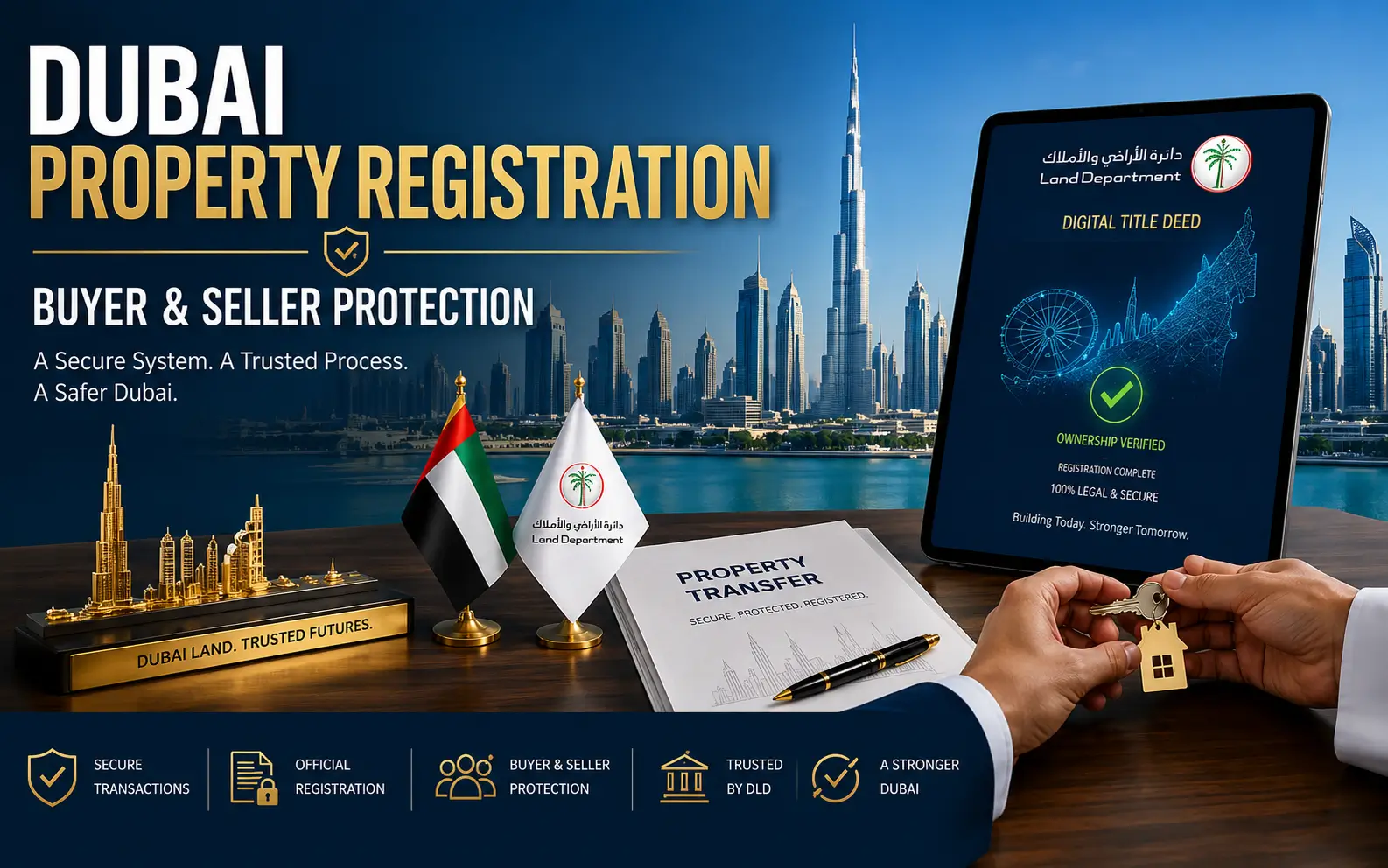
Together, they keep official records of ownership and provide documents that prove legal ownership. DLD registration in Dubai is a legal requirement. Without it, you will not be able to enforce your ownership rights. No entry in the DLD register is equivalent to no sale. This applies regardless of the private contract signed by the parties.
By 2026, most of the record-keeping will be done digitally, using blockchain technology. The Dubai REST app now provides a verifiable, secure record of proof of ownership, instead a paper document that can be lost or forged.
The System that Protects Buyers
Most protections are designed for buyers, who face the greatest financial risk.
Title deed verification.
Buyers can verify the status and ownership of a property before paying any money through DLD’s title deed service. The seller’s name has to match the official record, so this single check will defeat most double-sale and impersonation scams.
Escrow protection is available for purchases made outside of a plan.
Payments are not made directly to the developer when purchasing a property that is still in construction. According to Law No. Under Law No. 8 of 2007 (commonly known as the Escrow Account Law), buyer money is kept in a specific project account and released once verified construction milestones have been reached. Even in the event of a developer’s bankruptcy, escrowed funds cannot be taken and must be used for the completion of the project or to refund investors.
Registration off-plan is mandatory.
The Oqood System is used to record off-plan properties in the Interim Property Register. The Law No. Dubai Law No. 13 of 2008 created this register. A sales purchase agreement that is not registered cannot be enforced. This register prevents developers from selling the same unit in secret.
Brokers who are verified
Buyers can check in seconds if an agent is legitimate by checking if they have a RERA broker license.
How the system protects sellers
Protection is not only for buyers. A regulated transfer process benefits both the buyer and seller.
Ownership only transfers after payment and documentation are confirmed during an official transfer appointment. The seller does not give the property away on trust. The transfer of ownership is recorded at the same time as the settlement. This way, the seller does not have to chase a buyer that has already taken possession.
Before transferring a property that is mortgaged or managed by a developer, you will need a Certificate of No Objection (NOC). It confirms that all dues and service charges have been paid, protecting the seller against later claims. It is important to transfer the funds within a certain time frame, as the NOC only lasts for a short period.
The role of Real Estate Registration Trustees
The majority of transfers are completed at licensed trustee offices, not government counters. These offices are private companies that have been authorised by DLD, to process registrations in its name. This speeds up the system and keeps it under official control.
Registration trustees verify identities, check documents, collect fees and enter the transaction directly in DLD’s computer system. Under DLD supervision, established offices like Tamleek Real Estate Registration Trustee handle transfers, title deeds issuance, mortgage registrations, and more. A Tamleek real-estate registration trustee, or similar licensed office, provides both parties with a neutral and accountable venue to ensure the deal is recorded accurately the first time.
Costs and documents typical in 2026
Understanding the standard charges will help both parties budget and identify anything that is unusual.
| Item | Cost Typical (2026) |
| Transfer fee for DLD | 4% of the property value |
| Registration fee (above AED 500 000) | AED 4,000 plus VAT |
| Registration fee below AED 500,000 | AED 2,000 plus VAT |
| Trustee Office Service Fee | Variations by Office |
The most important documents are usually a passport valid, an Emirates ID for residents of the UAE, a sale agreement signed, the developer’s NOC and the title deed if the unit is being resold. Bank pre-approval is also required for mortgage buyers, while company buyers will need to provide their trade license and supporting documents. DLD can update rates, so it is best to confirm the current fee directly.
Before you sign , check the simple checks
Most problems can be avoided by spending a few minutes on verification.
- Dubai REST can confirm the ownership and title deed.
- Trakheesi allows you to check the RERA license of the broker.
- Before paying for off-plan projects, check with DLD the escrow account numbers.
- Do not transfer the funds unless you are at a trustee office that is licensed.
- Never transfer ownership or pay into an account before settlement.
Conclusion
Dubai’s registration system for property protects both buyers and sellers, as it eliminates blind faith from the equation. Escrow rules protect off-plan money, mandatory registration stops double sales, digital titles deeds prevent forgery and licensed trustee offices ensure accountability. The message for anyone entering the housing market in 2026 is clear: follow the formal process and verify everything using DLD. This will ensure that your transaction is secure.