


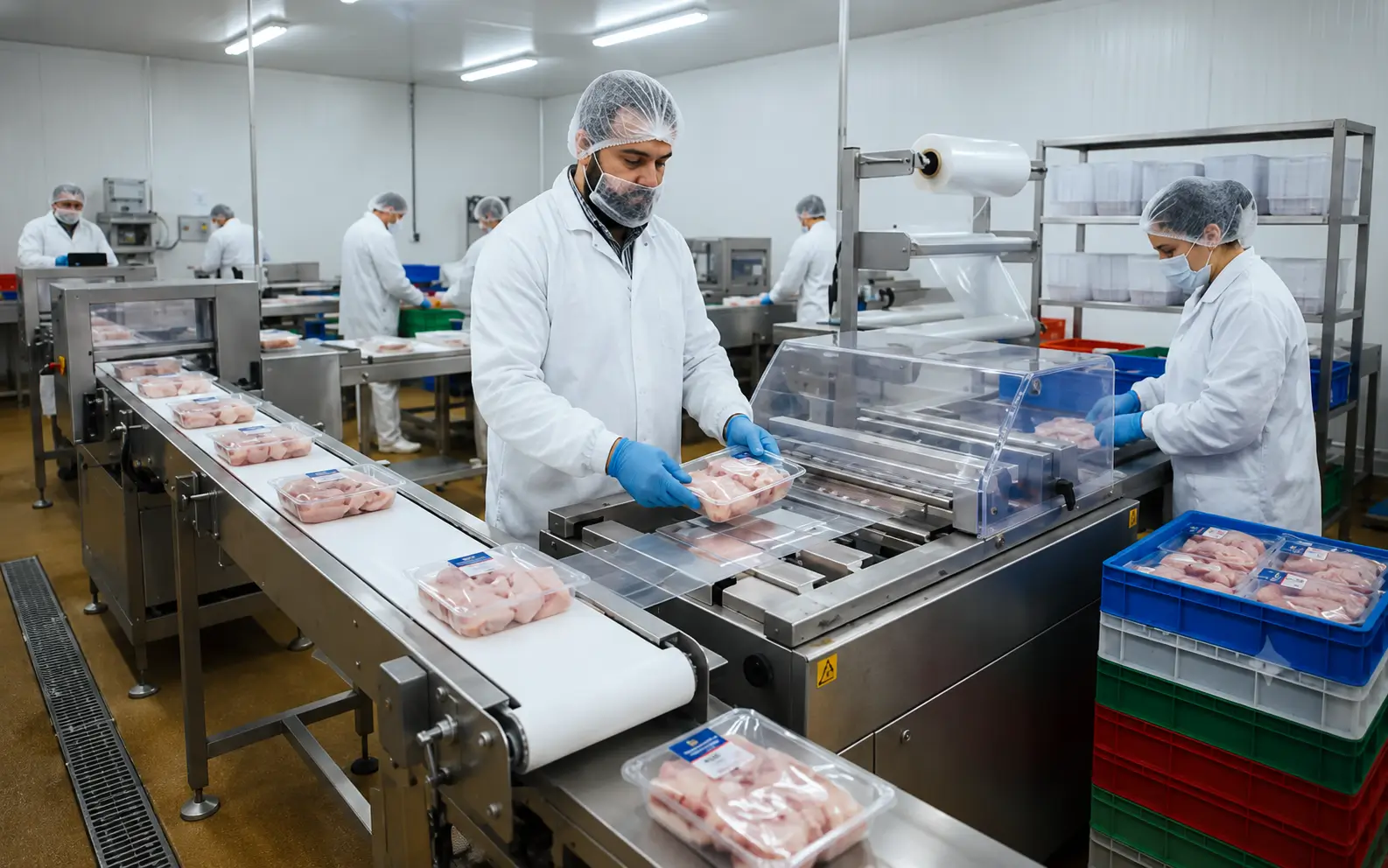
The food processing industry places a high priority on the safety of its products. Each product must be stored, handled and transported in such a manner as to reduce contamination and protect consumer health.
The right packaging material is crucial to achieving this. Plastic packaging helps HACCP compliance because it improves hygiene, reduces contamination risks and makes cleaning easier.
It also provides protection for food during storage, transport and product handling. It helps companies maintain consistency in quality, meet safety standards, and improve their daily operations.
Why HACCP compliance is important in food processing?
Hazard Analysis and Control Points (HACCP), a system that helps food companies identify and control food-safety risks, before they reach consumers.
HACCP is a system that focuses on prevention, rather than reacting after a problem has occurred.
HACCP-compliant food processors improve their product quality, reduce waste and protect their reputation while meeting regulatory requirements.
The packaging and storage of food is an integral part of maintaining a safe supply.
How does plastic packaging improve food safety and HACCP compliance?
1. Plastic packaging helps maintain better hygiene
Food safety requires clean packaging. Plastic packaging of high quality is smooth and non-porous, so it does not absorb dirt or moisture.
Cleaning and sanitizing is much easier than with other materials. Businesses who use hygienic packing reduce the chance of bacteria growing on handling and storage equipment.
HACCP is supported by better hygiene, which helps processors to maintain a clean environment in the production area.
2. Reduces the risk of cross-contamination
The biggest concern in food processing plants is cross-contamination. Cross-contamination can occur when raw foods come into contact with prepared food or when dirty equipment transmits harmful bacteria.
Plastic packaging reduces these risks because it allows food products to be properly separated when being handled and stored.
Several food processors use separate containers for different types of food. This simple method improves food safety and organization in the entire facility.
3. Easy Cleaning and Sanitation Supported
Cleaning packaging used for food processing is important to maintain its shape and strength.
Plastics that are food-grade can withstand frequent washing, sanitizing and exposure to moisture without being damaged. They are therefore suitable for use on a daily basis in production environments.
Crateco Pack LLC is a popular choice for businesses looking for a reliable plastic crates supplier in Dubai. Durable food-grade storage options support hygienic handing while meeting the needs of daily food processing operations.
4. Protects food during storage and transport
Before reaching the customer, food products go through several stages. Food products are transported, stored, loaded, and unloaded. Sometimes they’re moved between facilities.
Strong plastic packaging protects products from dust and moisture as well as physical damage and environmental contamination during the entire journey.
Packaging that is reliable also reduces the loss of products due to damaged containers. Food safety is improved by better product protection, while businesses can reduce their operational costs.
5. Separation of products is important.
To prevent contamination, it is important to store different food products separately. Never mix raw meat, seafood and vegetables with dairy products or ready-to-eat food during transport or storage.
Plastic packaging is a great way to store products in a safe manner.
Separating products properly can also make warehouse operations more efficient. Employees are able to quickly identify products, reducing the risk of food safety mistakes.
6. Enhances product identification and traceability
HACCP demands that businesses maintain accurate records during the entire food production process. Plastic packaging is a great way to carry barcodes and other information such as batch numbers, tracking, and labels without compromising product safety.
Labeling clearly helps companies identify their products during storage and distribution. Food processors can respond quickly to a problem if they have good traceability.
Food safety incidents can be reduced by identifying, isolating, and removing products faster.
7. Resists moisture and harsh processing conditions
Equipment is frequently cleaned in food processing plants, which are often located in humid environments. Packaging materials must be resistant to water, cleaning agents, and temperature fluctuations without being damaged.
Plastics made from food-grade materials perform well in these conditions, and they maintain their durability throughout the day. The moisture resistance of the plastic also reduces bacterial growth due to water absorption. This makes it an excellent choice for food handling and storage.
8. Supports Efficient Materials Handling
Plastic packaging that is well-designed improves product movement inside food processing plants. Containers that stack save space and make loading, unloading and transport easier.
Employees are spending less time handling products. This reduces unnecessary handling, and improves workplace efficiency.
A good material handling system will also reduce the risk of damage to products. Better food quality is achieved with fewer handling errors.
9. Reduces the risk of packaging damage
When food is stored or transported in damaged packaging, it can be contaminated. Under normal operating conditions, strong plastic packaging resists cracking, breaking and impact.
It helps protect the products in the entire supply chain. Nevertheless, regular inspections are still necessary to determine whether damaged containers need to be replaced. Packaging in good condition is important for both food safety and product quality.
10. Food Safety Standards: How to meet them.
Packaging that facilitates hygienic handling, safe storage and transport is required by food safety regulations. Plastic packaging that is suitable for food storage and handling is used widely because it meets all these requirements.
This allows businesses to improve the quality of their production and maintain a cleaner environment. Combining the right packaging with regular inspections and proper training for employees, a HACCP program is a success.
Use of plastic packaging in food processing: Best practices
Maintaining food safety is not just about choosing the right packaging. Businesses must also adhere to proper handling procedures each day in order to maintain HACCP compliance.
Consistent practices can reduce the risk of contamination, improve efficiency and prolong the life of food grade packaging.
- Choose food-grade packaging: Only use packaging designed for direct contact with food and that meets food safety standards.
- Clean plastic containers after each use. Thoroughly wash and sanitize every plastic container to remove bacteria and food residue.
- Replace damaged packages: Inspect packaging regularly, and remove cracked or broken containers immediately.
- Store empty bottles properly: Keep plastic packaging clean in a dry, covered and hygienic area until needed.
- Label your products clearly. Use clear labels to label products with batch numbers, dates, and product details. This will improve inventory management and traceability.
- Separate food products. Use separate plastic packaging for ready-to-eat and raw foods to reduce cross-contamination risks during handling.
- Regularly inspect packaging to detect damage, cleanliness problems, or signs before use.
- Regularly train employees: Inform employees about proper packaging handling and cleaning procedures.
- Adhere to cleaning schedules Create routine cleaning and maintenance programs and adhere to them in order to keep all plastic packaging reusable hygienic.
These simple practices can help businesses get the most out of plastic packaging, while maintaining HACCP compliance.
Conclusion:
Plastic packaging is an important part of a system that ensures food safety and efficiency. It supports all stages of food handling, from improving hygiene to reducing contamination risk and protecting products during transportation and storage.
By understanding how plastic packaging can support HACCP compliance, businesses can improve food safety and meet industry standards with confidence.
Combining food-grade packaging with regular inspections and employee training and proper cleaning will help processors produce safe, high-quality goods and maintain the trust of their customers.
Read Also:
