


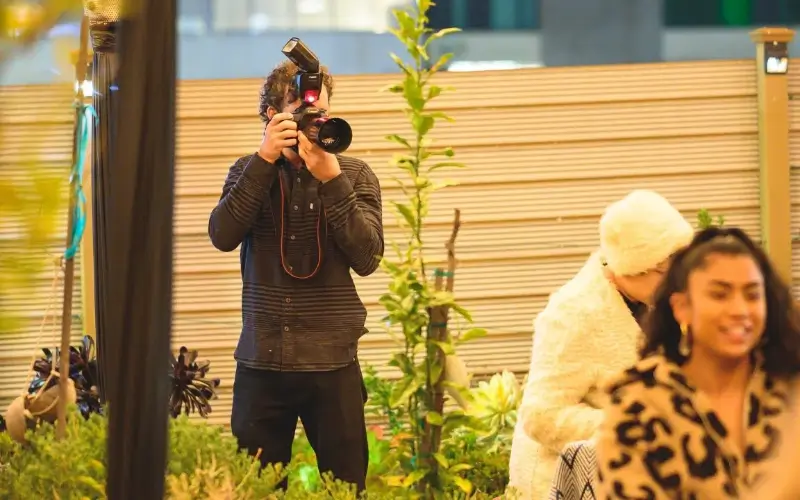
Professional photography can help preserve the important moments, people, atmosphere, and details of an event. Whether the occasion is a corporate conference, exhibition, wedding, graduation, gala dinner, product launch, or private celebration, photographs can provide both a record of what happened and visual content for future use.
Hiring a photographer for events requires more consideration than simply selecting a camera operator. Event organizers should think about the type of coverage required, the schedule, venue conditions, photography style, number of attendees, expected deliverables, and how quickly the images are needed.
What Does an Event Photographer Do?
An event photographer documents an occasion as it happens.
Depending on the event, coverage can include formal portraits, candid interactions, speaker presentations, venue details, audience reactions, networking, award ceremonies, group photographs, and important activities.
The photographer may work from a predefined shot list while also responding to unexpected moments.
Current event photography services in Dubai commonly cover exhibitions, conferences, trade shows, commercial and PR events, concerts, festivals, graduations, gala dinners, award nights, corporate meetings, and weddings.
Start With the Type of Event
The type of event determines the photography approach.
A conference may require extensive speaker and audience coverage, while a gala dinner can place more emphasis on formal portraits, award presentations, table interactions, and venue details.
An exhibition may require photographs of booths, products, demonstrations, visitors, and business interactions. A wedding, meanwhile, may involve a combination of formal portraits and candid photographs.
Before hiring a photographer, identify the most important parts of the event so the coverage can be planned around them.
Decide What You Want to Capture
A useful event photography brief should identify priority moments.
These may include:
- Opening ceremonies
- Keynote speakers
- Panel discussions
- Product demonstrations
- Award presentations
- Group photographs
- Guest arrivals
- Networking
- Branding displays
- Venue decoration
- Candid interactions
- Closing moments
Providing this information before the event gives the photographer a clearer understanding of what should not be missed.
Choose a Photography Style
Different events may benefit from different photography styles.
Candid photography focuses on natural interactions and spontaneous moments. It can work particularly well for networking events, celebrations, and informal gatherings.
Documentary-style photography emphasizes the overall story of the event, including people, surroundings, activities, and transitions.
Formal photography is more structured and can include posed group photographs, executive portraits, award photographs, and other planned shots.
Consider the Event Schedule
The event schedule should be shared with the photographer in advance.
A detailed agenda can help identify when key photographs need to be taken. For example, a conference photographer may need to move between keynote presentations, networking areas, exhibition booths, and breakout sessions.
For award ceremonies, the photographer should know when recipients will be announced. For corporate events, important executives or guests may need to be identified beforehand.
Schedule information also helps determine how many photographers may be required.
How Many Photographers Do You Need?
The number of photographers depends on the size and structure of the event.
A small gathering taking place in one room may only require one photographer. A large conference with multiple simultaneous activities may benefit from additional photographers.
Multiple photographers can cover different areas at the same time. This can be particularly useful when the event has separate stages, exhibition halls, networking areas, or parallel sessions.
The required crew size should therefore be based on the event schedule and venue rather than attendance alone.
Venue and Lighting Conditions
Event venues can present challenging photographic conditions.
Conference halls may have mixed lighting, dim stages, bright screens, or changing colours. Gala dinners can involve low ambient light, while outdoor events can create rapidly changing exposure conditions.
A professional photographer should assess the venue and determine what equipment and approach are appropriate.
Venue access should also be discussed in advance, particularly if there are restricted areas or specific rules concerning photography.
Prepare a Shot List
A shot list can provide structure without preventing spontaneous photography.
For a corporate event, it might include:
- Venue exterior
- Registration area
- Branding
- Guest arrivals
- Opening remarks
- Keynote speaker
- Audience reactions
- Networking
- Product displays
- Group photographs
- Award presentations
- Closing moments
The photographer can then combine these planned shots with candid images throughout the event.
Photographing Speakers and Presentations
Speakers are often among the most important subjects at conferences and corporate events.
The photographer should capture more than one type of speaker image. Wide photographs can show the stage and audience, while closer images can capture expressions, gestures, and presentation details.
The screen behind the speaker may also be important because it can identify the presentation or event.
Careful positioning is necessary so that the photographer can obtain useful images without obstructing the audience.
Group Photography
Large group photographs require additional planning.
Before taking a group photograph, determine:
- Who needs to be included
- Where participants should stand
- Whether multiple group combinations are required
- Where the photographer should stand
- Whether sufficient lighting is available
- How much time is available
A designated event coordinator can help gather participants quickly.
For executive or award photographs, it can also help to prepare a list of names beforehand so the photographer knows who needs individual or group coverage.
Capturing Candid Moments
Candid photographs can show the atmosphere of an event in a way that posed photographs cannot.
Useful candid moments may include conversations, networking, reactions to presentations, applause, demonstrations, interactions between colleagues, and informal celebrations.
The photographer should remain aware of the event environment and avoid unnecessarily interrupting guests.
A balanced gallery can include both carefully arranged photographs and naturally occurring moments.
Fast Photo Delivery
The required delivery speed should be established before the event.
Some organizations need photographs several days after an event for internal communications or marketing. Others may need selected images on the same day for social media, press releases, or live event updates.
Not every event requires rapid delivery, so the turnaround should be included in the project brief.
Image Editing and Final Deliverables
Event photography usually involves more than transferring raw files.
Professional delivery may include selecting photographs, colour correction, exposure adjustments, cropping, and other editing steps.
The organizer should confirm whether the final package includes:
- Edited high-resolution photographs
- Web-ready images
- Social media versions
- Same-day previews
- Online gallery access
- Specific image selections
- Different file sizes
Photography for Social Media
Event photographs are frequently used after the event for digital communications.
Organizers may publish photographs on LinkedIn, Instagram, Facebook, websites, newsletters, press releases, or internal communications.
If social media is an important objective, tell the photographer before the event. This can influence the types of images captured and the framing used.
Vertical photographs, detail shots, speaker images, branding, and candid interactions can all have different uses depending on the platform.
Coordinate With the Event Team
Photography works best when the photographer knows how the event is being managed.
The photographer should have access to the event schedule, venue information, contact person, and any relevant restrictions.
A short briefing can cover:
- Arrival time
- Registration location
- Key contacts
- Restricted areas
- Priority guests
- Important sessions
- Group-photo requirements
- Delivery expectations
- Emergency schedule changes
Good communication is particularly important when event schedules change at short notice.
Questions to Ask Before Hiring
Before booking an event photographer, ask:
- What types of events do you cover?
- What photography styles do you offer?
- How many photographers are recommended?
- What equipment will be used?
- Can you work in low-light venues?
- Do you provide formal and candid photographs?
- How many edited images should we expect?
- Is same-day delivery available?
- How are files backed up?
- How will photographs be delivered?
- Are social-media-ready images included?
- How are additional hours handled?
- What happens if the event schedule changes?
Written answers can make it easier to compare different proposals.
Conclusion
Hiring a photographer for events involves considering the event format, schedule, venue, lighting, photography style, number of photographers, priority shots, editing, delivery speed, and file storage. A clear brief can help ensure that important moments are documented while still leaving room for spontaneous photographs. For organizations planning event coverage in Dubai, Dreambox Videography & Photography publishes event photography services covering conferences, exhibitions, corporate and PR events, concerts, festivals, gala dinners, award nights, weddings, and other private and public occasions. The company also states that its photographers can provide candid, documentary, formal, and creative styles, along with different delivery options. These statements describe the provider’s own services and should be evaluated against the specific requirements of an event.
Read Also: Safeer Mall Ajman
